Posted by Adina Hemley-McCay on | Comments Off on MFI in the Spotlight: Industry Recognition, Standards Adoption, and Slow-cure Spray Polyurea System Momentum
MFI in the Spotlight: Industry Recognition, Standards Adoption, and Slow-cure Spray Polyurea System Momentum
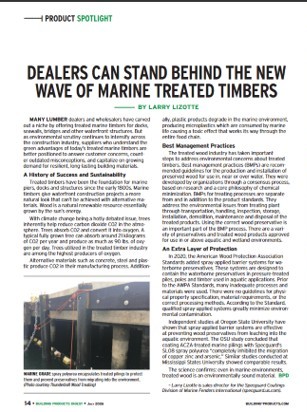
MFI Spotlighted in Building Product Digest- July 2026 edition and The Merchant magazine- July 2026 edition
It’s been an exciting achievement for Marine Fenders International, with our work getting some well-deserved attention from the marine and wood preservation industries — and real traction for our slow-cure spray polyurea system coating on treated timber applications.
Free Press: Our Pacific Ports Article Gets a Second Life
We’re happy to share that Building Products Digest featured a Product Spotlight article in its July 2026 issue on the growing role of treated marine timbers, written by our own Larry Lizotte, Sales Director for the Specguard Coatings Division of MFI. The piece — originally written for Pacific Ports magazine a few years back — covers the sustainability case for treated timber, the industry’s best management practices, and the 2020 AWPA standard for spray-applied barrier systems, including independent research from Oregon State University and Mississippi State University showing SL08 spray polyurea effectively blocks the migration of copper, zinc, and arsenic preservatives out of treated pilings. It’s always rewarding when industry publications see lasting value in our content.
Featured in WWPI: A Deep Dive on SLO8 and Treated Timber
The Western Wood Preservers Institute (WWPI) invited us to contribute an article focused specifically on our slow-cure polurea system coating product and its effectiveness when applied to treated timber. This was a great opportunity to speak directly to an audience of specifiers, engineers, and wood treatment professionals about the performance benefits slow-cure polurea system coatingbrings to marine and waterfront timber applications.
SLO8 Now Complies with the AWPA Book of Standards
Perhaps the biggest news: slow-cure polurea system coating has officially been included in the American Wood Preservers Association (AWPA) Book of Standards. This is a significant milestone — inclusion in the AWPA standards helps drive specification of slow-cure polurea system coating across the industry, giving engineers and procurement teams a recognized standards reference when calling out the product on new projects.
Port of San Francisco Adopts the Standard
That momentum is already translating into real-world adoption. The Port of San Francisco has adopted the AWPA standard — slow-cure polyurea system coating among them — for its own specifications. It’s a strong validation of the product’s performance and a great example of how standards adoption opens doors with major port authorities. We have successfully completed numerous marine projects over the past decades with our SLO8 materials and proprietary process. Please contact us for more information.
Posted by RPM Developers on | Comments Off on Types of Buoys: A Comprehensive Guide for Navigation and Mooring Systems
Buoys are floating navigational aids that can be used for marking channels and hazards or as mooring systems. They are vital for directing traffic safely and offering secure, anchored docking points. In this guide, learn more about the different types of buoys, the engineering behind navigation and mooring buoys, and how specific marker buoys and oceanographic buoys function in the ocean environment.
Understanding Marine Buoy Classification
Different types of buoys serve distinct functions in marine environments and are generally classified by their specific function. Port authorities can deploy these structures to guide traffic, anchor ships, indicate hazards, or monitor weather conditions in the unpredictable ocean setting. The specific type and size of buoy device needed depend on the application, water depth, tidal forces, environmental conditions, and vessel size. Marine Fenders International specializes in resilient composite foam-filled buoys built around a closed-cell foam core and a central steel strength member, which keep the buoy afloat even if the outer skin is punctured — a key advantage over plastic and hollow steel designs.
Navigational and Marker Buoys for Safe Waterway Access
Clear visual indicators are essential for keeping commercial vessels clear of underwater hazards, shoals, and shallow reefs. Marker buoys flag these obstructions and define boundaries such as restricted areas, anchorage zones, and active work sites, giving crews a fixed point of reference in open water. They are brightly colored for high visibility and can be fitted with reflective tape or solar lighting for low-visibility and night operations.
Navigation buoys guide ship traffic through complex channels and act as the road signs of the sea. Because vessels rely on them to ensure safe passage, these structures must meet strict regulatory requirements for color, shape, and markings.
Where a vessel needs to mark the position of its own ground tackle, an anchor buoy, Ocean Guard™ Pendant Buoys | Marine Fenders International connects to the anchor with a line, allowing the crew to locate and recover the anchor and warn nearby vessels away from the anchor line.
Durable Mooring and Support Buoy Systems
Facilities need heavy-duty solutions to secure large vessels without traditional pier docking. Mooring buoys can feature steel cores and reinforced lifting eyes that absorb severe vessel movement while remaining stable under heavy mechanical loads.
Other configurations for structural marine environments include:
Cylindrical buoys. These models deliver consistent buoyancy for marine operations.
Support buoys.These units can hold hoses, cables, and pipelines above the seabed to reduce stress on vessels and underwater infrastructure.
Chain through buoys. This configuration allows the anchor chain to pass directly through the central tube for maximum physical stability.
Universal buoys. These general-purpose buoys accept interchangeable end fittings to suit a range of applications.
Specialized Oceanographic and Weather Buoy Applications
Researchers and offshore operators need stable platforms to collect environmental data. Oceanographic buoys house sensitive weather and water-monitoring instruments and can maintain stability during severe wave action. This helps protect the delicate sensors and telemetry equipment operating in the rough ocean environment.
How MFI Customizes Buoy Solutions for Any Environment
It’s important for each buoy to meet the parameters of the intended marine environment, including functionality, safety, and regulatory requirements. Marine Fenders International manufactures customized Ocean Guard™ universal buoys and models tailored to specific application needs. Depending on the application, this can include specific coatings, fendering and mooring hardware, reflective tape, and more.
Contact Marine Fenders International To Learn More
The correct marine infrastructure impacts the safety and efficiency of your maritime operations. Whether your port requires visible marker buoys, mooring buoys, or specialized oceanographic buoys, Marine Fenders International can supply or manufacture the flotation system for the intended marine environment.
Request a quote to get started, or contact us to learn more about our buoy customization options.
Posted by RPM Developers on | Comments Off on Foam-Filled vs. Pneumatic Marine Fenders: Selecting the Optimal System for Your Port
Selecting the right marine fender shapes the safety, uptime, and lifetime cost of every berth. For the project engineers and estimators specifying a system, the decision usually narrows to two proven options — foam-filled and pneumatic — each absorbing the energy of a docking vessel in a fundamentally different way. The right choice depends on your vessels, your berth conditions, and how much maintenance your operation can realistically support.
Marine Fenders International engineers and manufactures heavy-duty marine fenders for commercial terminals, shipyards, and naval facilities worldwide, including durable foam-filled fenders, high-capacity pneumatic rubber fenders, and deep-draft hydropneumatic fenders built to protect valuable maritime infrastructure. This guide compares the two systems across energy absorption, maintenance, and damage tolerance — and covers the marine fender design considerations that determine the optimal barrier for your port.
Comparing Performance: Foam-Filled vs. Pneumatic Marine Fenders
Selecting the right marine fender starts with the operational loads at your berth — the size and approach speed of your vessels, your berthing frequency, and the environmental conditions the system has to absorb. Three metrics frame the comparison: energy absorption (how much berthing energy the fender can take in), reaction force (how much of that load is transmitted back to the structure and the hull), and hull pressure (how that force is distributed across the contact area). The goal is a fender that absorbs the design berthing energy while keeping reaction force and hull pressure within safe limits for both your structure and your vessels.
Both foam-filled and pneumatic marine fenders act as cushions, absorbing the kinetic energy of a docking vessel — but they get there differently. Pneumatic marine fenders use air compression: the trapped air column compresses under impact, spreading the load across a large surface area, which suits rough-weather and offshore berthing and lets you tune performance by adjusting internal pressure. Foam-filled fenders rely instead on a closed-cell foam core that compresses to absorb impact, delivering consistent, predictable performance with no air system to manage. That core difference — air versus foam — drives most of the practical trade-offs in maintenance, damage tolerance, and reaction-force tuning covered in the sections below.
Marine fender performance is also governed by recognized industry standards, including PIANC’s fender design guidelines and ISO 17357 for floating pneumatic rubber fenders. MFI engineers every Ocean Guard™ fender to these requirements and validates it through independent testing, so the published performance you specify is what you receive.
The Benefits of Foam-Filled Systems
Heavy commercial ports demand continuous operation without frequent maintenance pauses. At Marine Fenders International, we engineer Ocean Guard™ foam-filled fenders to deliver high energy absorption, dependable buoyancy, and a long service life in the harshest berthing environments. Their benefits and features include:
Solid-core construction. The closed-cell foam core keeps the fender floating and functional even if the outer polyurethane skin is punctured or sustains heavy damage from sharp hull protrusions — there is no air chamber to lose, so a single breach won’t take the fender out of service.
Minimal maintenance. Foam-filled fenders eliminate the scheduled inflation checks and valve inspections that air-based units require, reducing downtime and lifecycle cost for high-utilization berths.
Low hull pressure. The compressible foam distributes berthing forces evenly across the contact area, protecting thin-skinned vessels from localized structural damage.
Durable, abrasion-resistant skin. A thick polyurethane skin stands up to repeated berthing, UV exposure, and marine abrasion, which is why foam-filled fenders perform well at exposed and high-traffic terminals.
When to Utilize Pneumatic Fender Solutions
Ship-to-ship (STS) transfer operations and exposed offshore terminals demand energy-management capabilities that a fixed fender can’t always provide. Ocean Guard™ pneumatic marine fenders distribute extreme docking forces safely across large surface areas to protect delicate ship hulls, which makes them the system of choice where vessel sizes and berthing conditions vary. They are especially useful in applications that demand:
Adjustable performance parameters. Internal air pressure can be modified to change the reaction force for different vessel classes — so a single fender set can safely serve a mixed fleet rather than being optimized for one ship.
Tidal adaptation. Air-filled units float directly on the water surface, maintaining constant hull protection through severe tidal fluctuations.
Ship-to-ship (STS) transfer and bunkering. Floating pneumatic fenders keep the supply and receiving vessels safely separated during cargo or fuel transfer at sea, absorbing relative motion between the two hulls while berthed alongside in open water.
Chain-and-tire net protection. Heavy-duty exterior netting absorbs the initial abrasive wear of repeated contact, extending the service life of the main rubber body.
Hydropneumatic Fenders for Submarines and Deep-Draft Vessels
Submarines and other deep-draft vessels need protection where conventional surface fenders can’t reach — below the waterline. For these applications, MFI supplies Ocean Guard™ hydropneumatic fenders, a specialized variant that combines internal water and air pressure to establish a vertical protective barrier extending well beneath the surface.
The water ballast in the lower portion makes the fender float partly submerged rather than resting on the surface, so it stands upright in the water and cushions the hull along its draft instead of only at the waterline. That vertical orientation is what makes hydropneumatic fenders the standard choice for berthing submarines, where the widest part of the hull sits deep below the surface and a surface-only fender would leave it unprotected.
For naval programs with these requirements, MFI also manufactures dedicated submarine fenders engineered to the specifications these vessels demand.
Selecting the Right MFI Fender System
Choosing the right marine fenders is key to maintaining safety and smoother operation in maritime environments. Marine Fenders International provides engineering and manufacturing services to deliver high-quality products. With over 30 years of experience, we work with our customers to deliver reliable port protection for varying project budgets. This experience extends to heavy-duty components that must meet military specifications for naval deployments.
Choosing the right marine fender is key to safe, efficient operation in demanding maritime environments — and the best choice depends on your vessels, berth conditions, and maintenance capacity. As a guideline: Ocean Guard™ foam-filled fenders suit permanent, high-utilization berths where low maintenance and damage tolerance matter most; pneumatic marine fenders fit ship-to-ship transfer and mixed fleets that need adjustable, tunable performance; and hydropneumatic fenders protect submarines and deep-draft vessels below the waterline.
Marine Fenders International provides full in-house engineering and manufacturing across the entire Ocean Guard™ line of foam-filled, pneumatic, and hydropneumatic fenders. With over 30 years of experience, we work with each customer to deliver reliable port protection across a range of project budgets — and that experience extends to heavy-duty components built to meet military specifications for naval deployments.
Contact Marine Fenders International Today
Protecting commercial ships and naval vessels takes expert engineering and the right materials. Our in-house team executes every marine fender design and build, delivering the heavy-duty systems your port facility demands. Whether you need puncture-resistant Ocean Guard™ foam-filled fenders, high-capacity pneumatic marine fenders, or deep-draft hydropneumatic fenders, we can manufacture a solution matched to your application’s requirements.
Request a quote or contact our team to discuss your maritime project today.


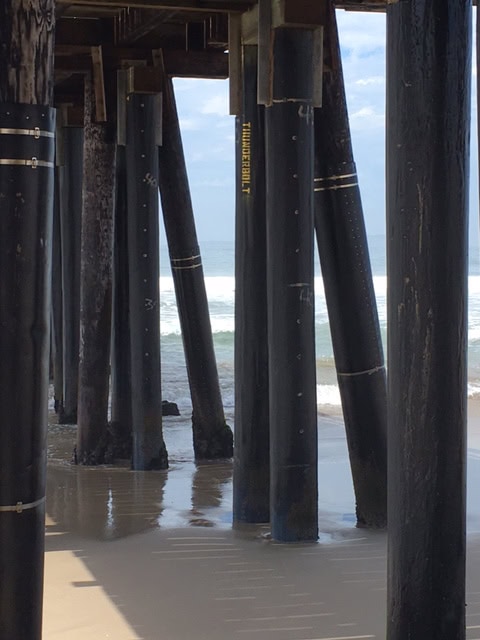 It’s been an exciting achievement for Marine Fenders International, with our work getting some well-deserved attention from the marine and wood preservation industries — and real traction for our slow-cure spray polyurea system coating on treated timber applications.
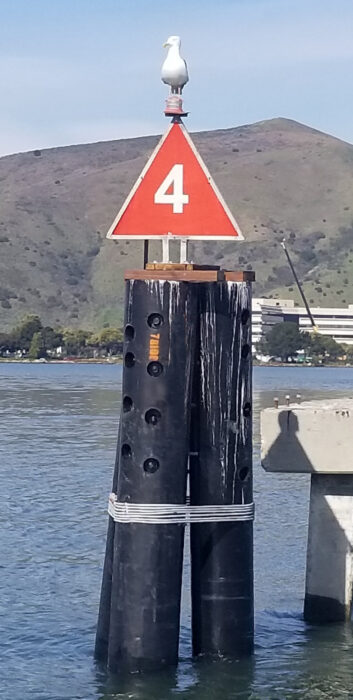 The Western Wood Preservers Institute (WWPI) invited us to contribute an article focused specifically on our slow-cure polurea system coating product and its effectiveness when applied to treated timber. This was a great opportunity to speak directly to an audience of specifiers, engineers, and wood treatment professionals about the performance benefits slow-cure polurea system coatingbrings to marine and waterfront timber applications.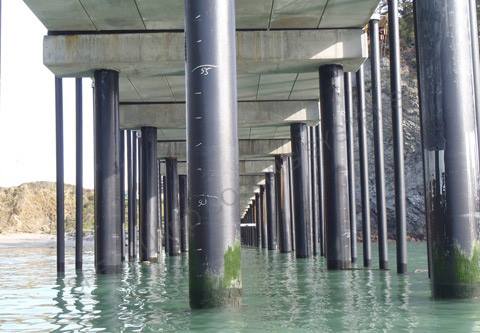
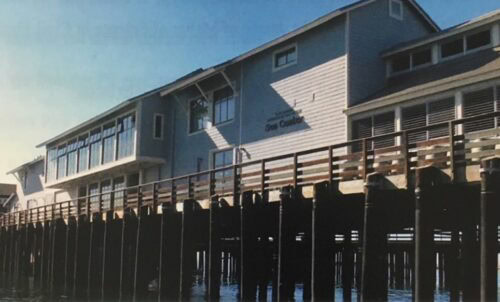 That momentum is already translating into real-world adoption. The Port of San Francisco has adopted the AWPA standard — slow-cure polyurea system coating among them — for its own specifications. It’s a strong validation of the product’s performance and a great example of how standards adoption opens doors with major port authorities. We have successfully completed numerous marine projects over the past decades with our SLO8 materials and proprietary process. Please contact us for more information.